ATI Technologies : A Renovation for Culture
August 28, 2026
ATI Technologies : A Renovation for Culture
When companies decide to relocate from their existing space, the first concerns and priorities are typically aligned with business goals and the design solutions to accommodate. However, what happens when the main concern isn't about office layout, but instead about the employee culture?
ATI Technologies, a leader in specialty metals, approached NEXT architecture with a desire to move on from limited office space in the Central Business District to a newly renovated workplace in the recently revitalized Strip District.
However, both stakeholders and company leadership understood that this new office was going to have to accomplish two daunting post-pandemic tasks : enticing employees back into the traditional workplace while also designing a space that no longer only supports the traditional way of working
The Original Workplace
ATI's original office lacked crucial design elements that aid in retaining existing employees in the evolving workplace landscape. For example, the original office had perimeter offices that did not allow daylight into the core spaces.
These design elements would need to shift to reach ATI's goal of creating a space that accommodates multiple ways of working. ATI understood that during the pandemic, employees and leadership utilized a multitude of work styles that created a stable workflow for them. ATI wanted to ensure that their new space accommodates these individualized work styles.
How Programming Informed Strategy
With the cultural shift being one of the larger concerns about the relocation, our firm understood that the traditional programming process would be our north star in this design process.
ATI conducted focus groups and issued surveys to best understand and gauge the needs and wants of employees. In efforts to align leadership and stakeholders as quickly as possible, these surveys would surface hidden solutions that could create an ideal workplace for all.
These process were well received and led to ATI forming an internal group, the Modification Squad or 'Mod Squad', that spearheaded the process and championed the new office plan within their organization. The 'Mod Squad' was a small, focused team that met weekly and, in some cases, daily to advance initiatives. This allowed for transparent communication with NEXT and the general contractor to make sure everyone was aligned.
With this insight, our team was able to move forward with the design process and begin creating the ideal space for ATI and their team.
Conceptual Design and Intentional Use of Space
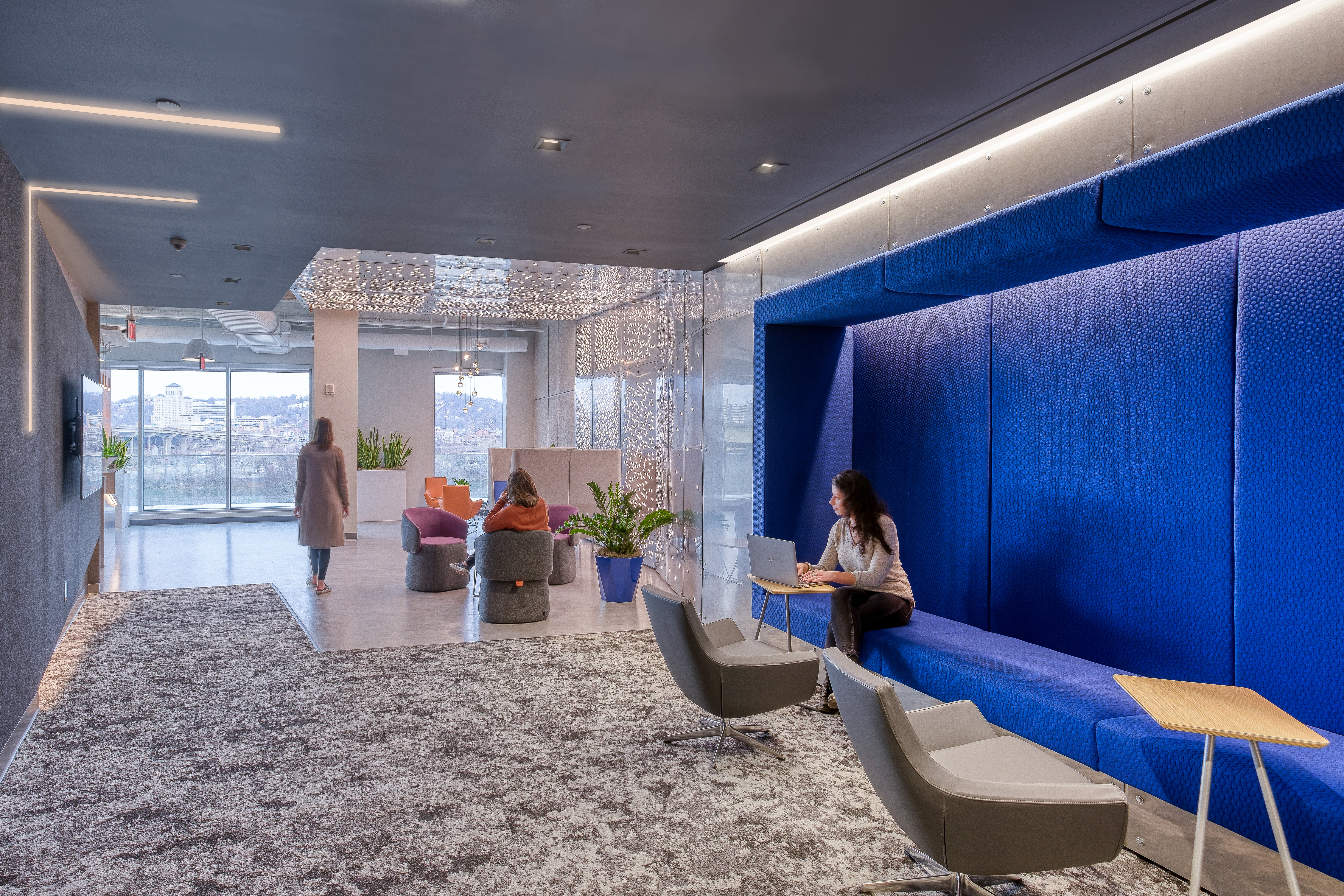
ATI's team used Pittsburgh as one of their sources of inspiration. Pulling from the experience of navigating one of Pittsburgh's iconic tunnels and then opening into the space and view of the city skyline, ATI wanted to incorporate this compression into open air feeling into their workplace design.
With this ideation and the information obtained throughout the programming process, NEXT was able to begin conceptual design.
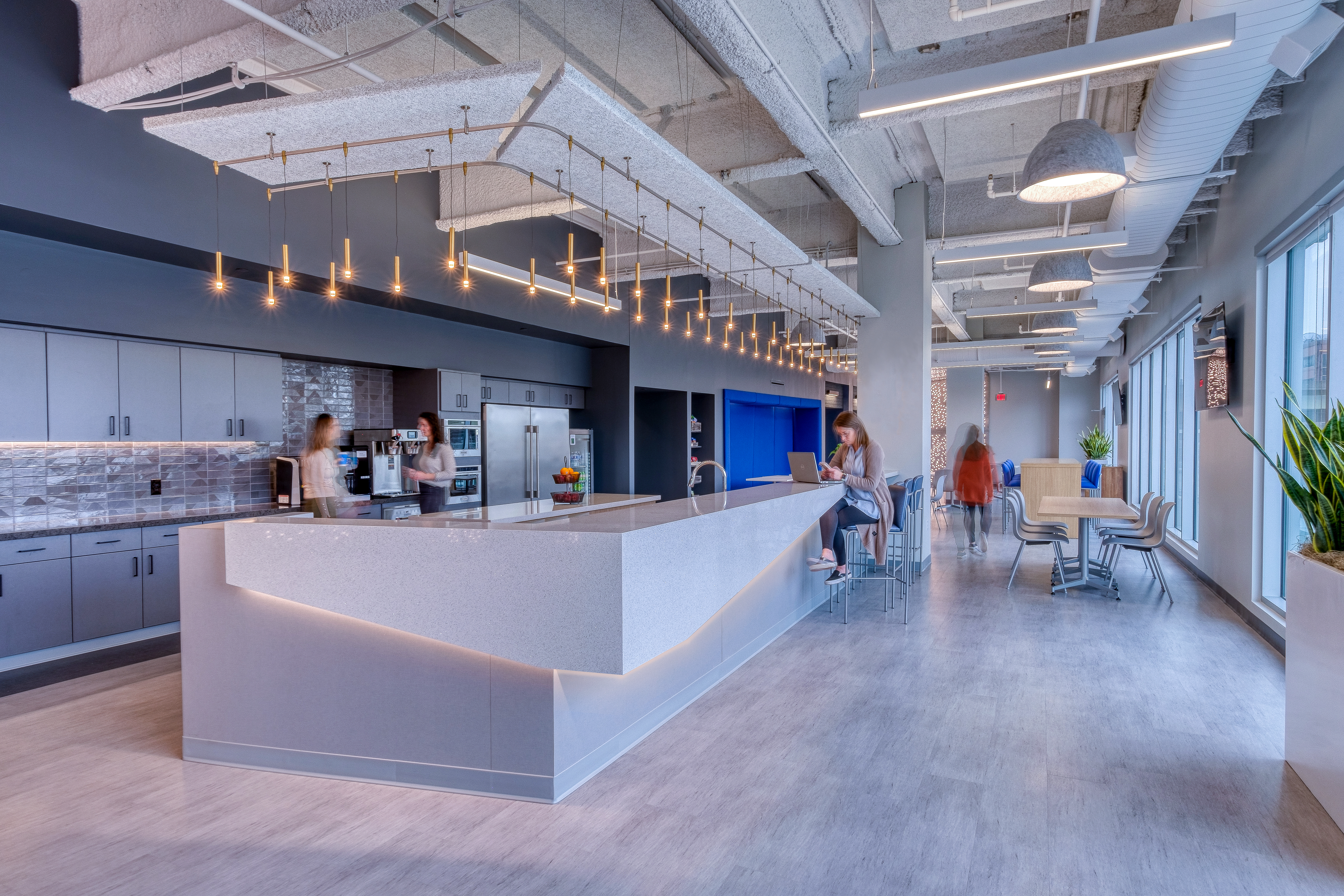
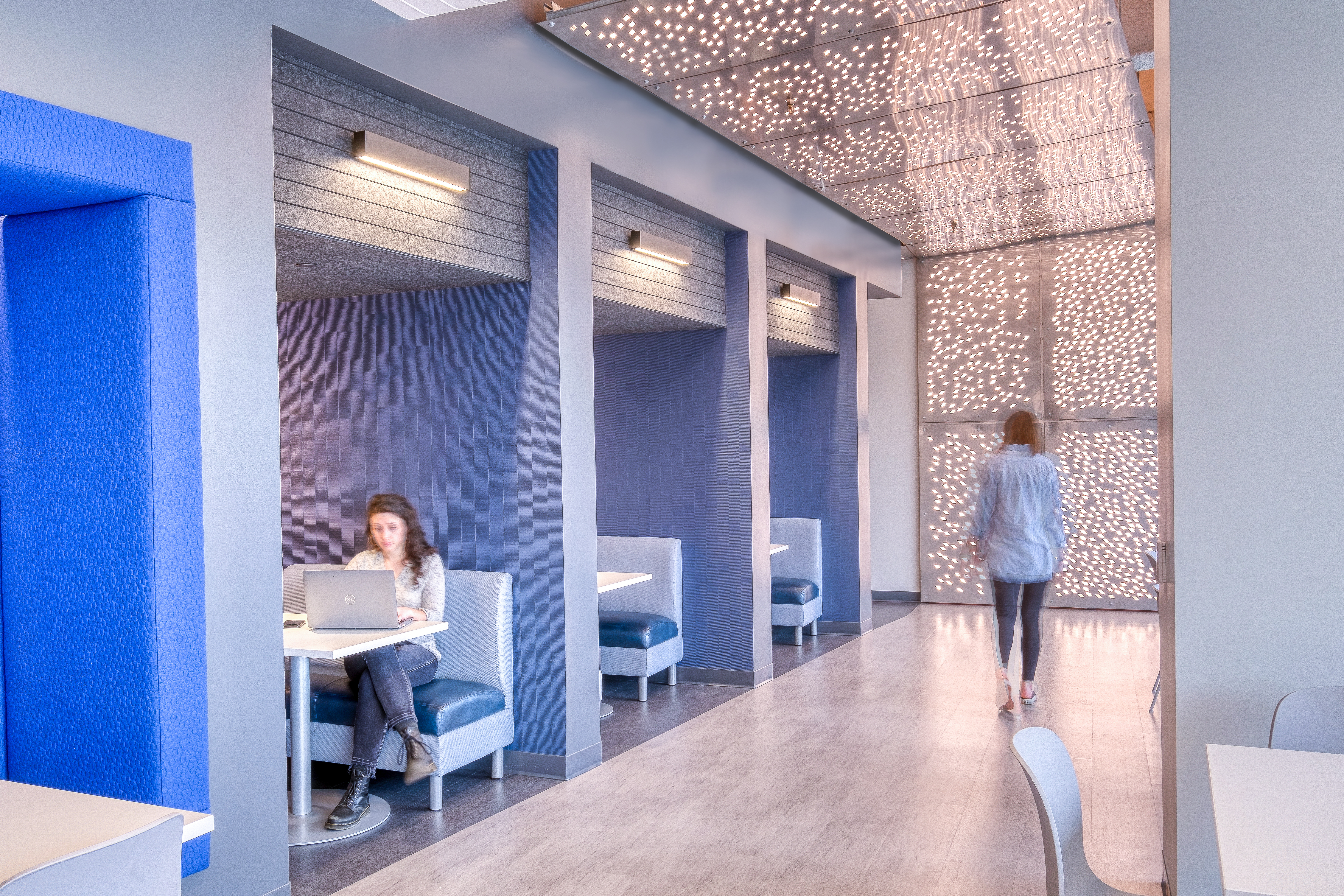
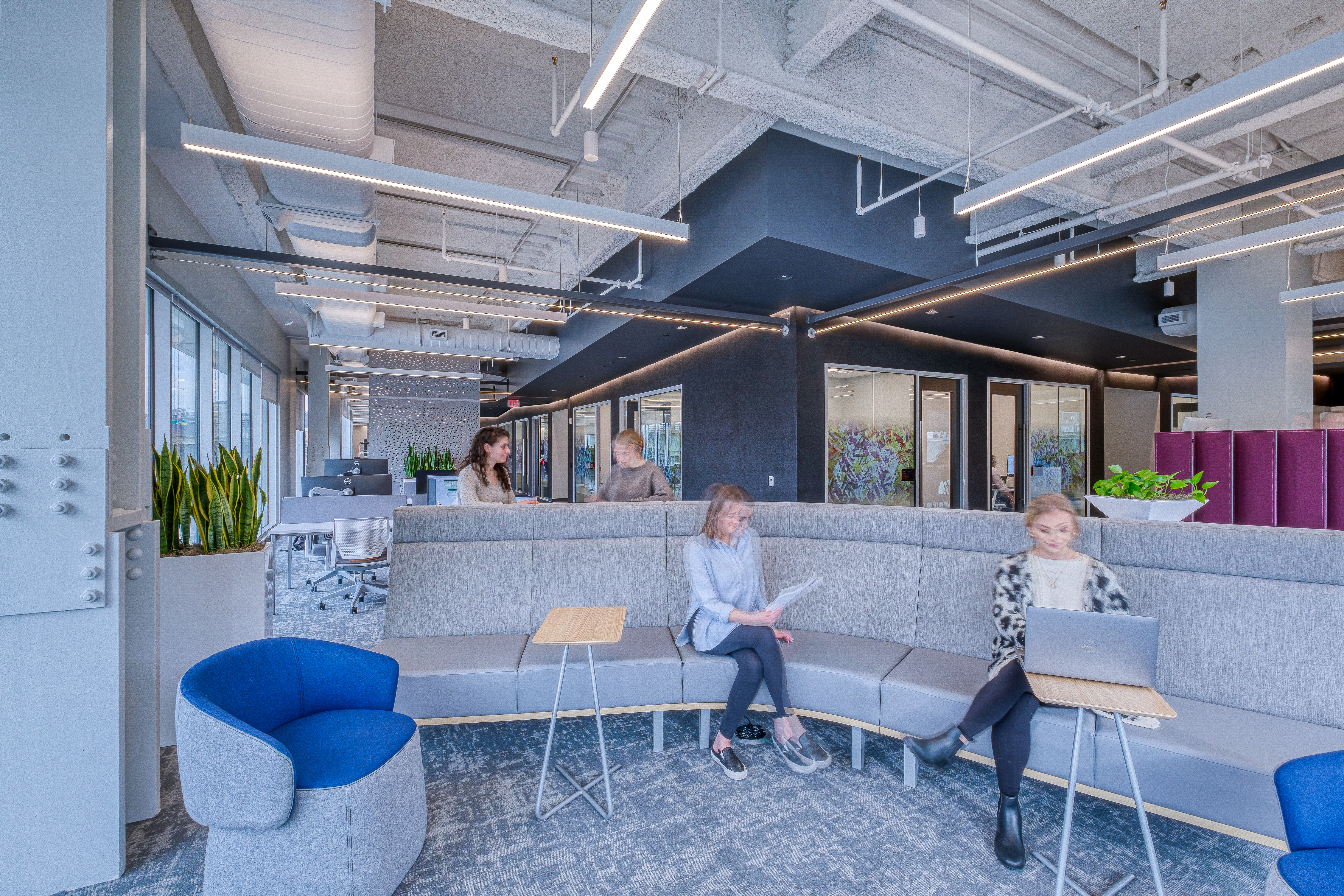
The compression area of the space begins in the center of the workspace. This space acts as the focus area of the office space. These focus areas were designed with lighter colors and tones in mind because it is the furthest away from the natural light of the space. This portion of the office is divided from the open-air portion of the office by a vertical plane that extends full height, giving it hierarchy and acts as a tool for wayfinding.
Once in the open-air and collaborative portion of ATI's office, employees are welcomed into the collaborative meeting spaces with a mid-tone materiality to help bridge the gap between the light tones of the focus areas to the darker tones.
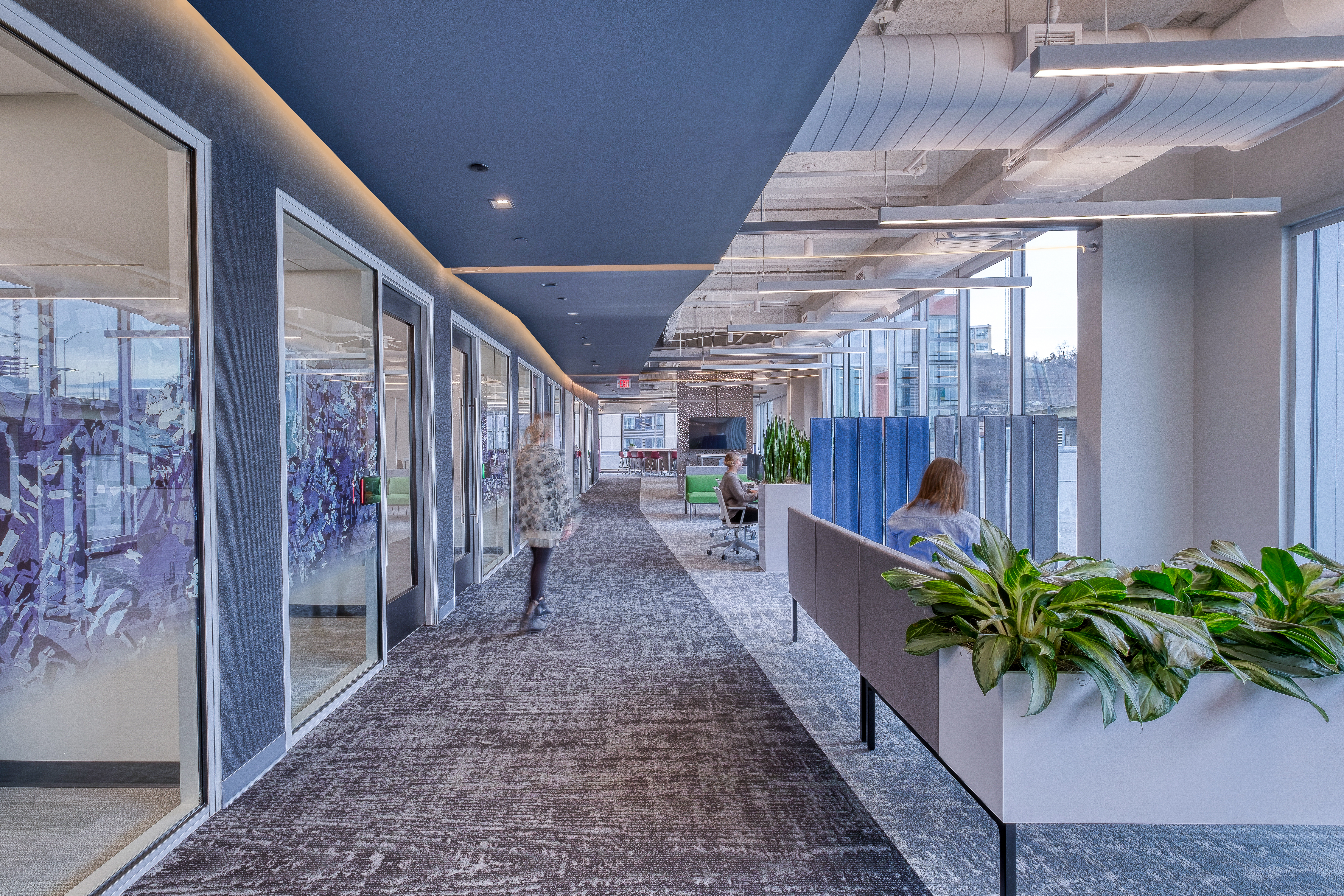
The concept design included options for employees to work as the day demands and has created a more efficient workspace. In NEXT's design of the space, all offices and enclosed rooms are clustered at the interior core of the space and were specifically oriented to face daylight and views outside of the office.
All components of the newly designed space were intentionally added to accommodate the work ATI Technologies does alongside the workstyles that suit employees best. For example, the metal used throughout construction is ATI's metal. The design methodically implements a gradient of dark to light and a converging palette of finish materials at intentional areas of space, highlighting the acceleration, innovation, and growth of ATI's metal and technology advancements.
The External Use of Change Management to Provide Internal Comfort
Efforts to welcome employees to their new space went beyond programming exercises and intention, detailed floor planes. ATI Technologies methodically hosted events for staff that would implement a gradual introduction to this new area of the city.
This use of change management dramatically helped ease existing employees into their new routine and space. For example, ATI Technologies invited staff into their new workplace before walls or deep construction began. They also hosted a multitude of local vendors from the area to welcome their staff and give them a taste of what to look forward to in their new location. ATI also hosted events in the Strip District to familiarize employees with the area and intentionally involved their employees in the design and construction process to let them know what their needs and opinions were heard.
The Results
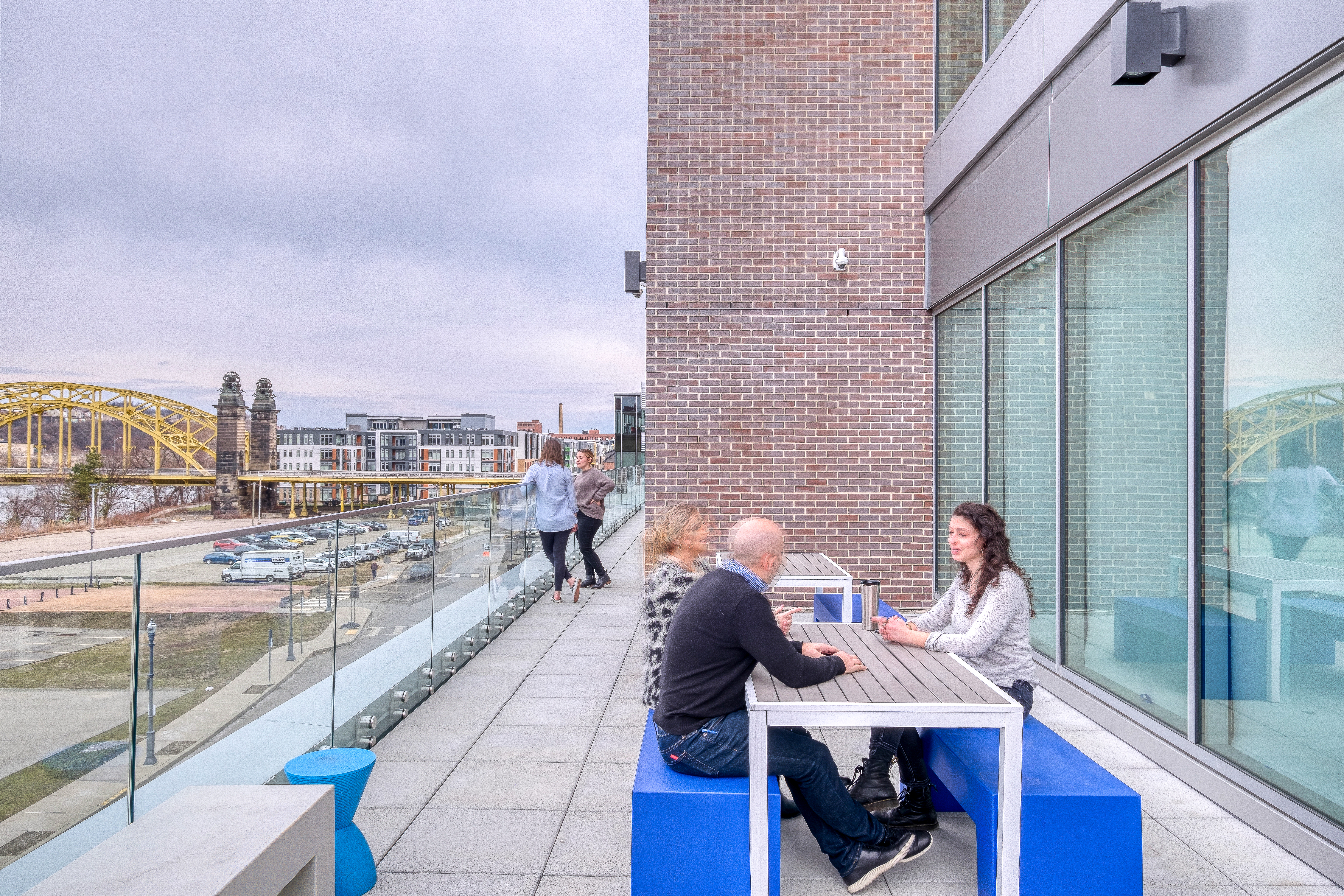
Through careful design and meticulous planning, NEXT architecture and ATI were able to not only change a workplace, but also the workplace culture.
Some key takeaways include :
- Surpassing Attendance Goals : Employees are now more likely to work in the office than from home, averaging 2-3 days in office. On top of that, attendance has spiked to over 60 people in office on designated team days.
- From 'Mod Squad' to WOW Group : The Mod Squad successfully evolved into WOW (Way of Working) Group acting as a permanent sounding board for office feedback and making layout adjustment as new, collaborative needs surface.
- Deeper Collaboration : Outside of the physical changes, the move has also boosted morale and allowed team members who previously rarely met in person to increase collaboration and team materiality.
ATI Technologies' move is proof that even the most difficult cultural shifts can be seamlessly mitigated with the right strategy. By engaging their employees early on and working collaboratively with our firm, ATI's team was able to successfully move to their new space, increase attendance, and helped turn a potential cultural barrier into a powerful tool for innovation and team connection.
We welcome the opportunity to speak with you about your project and how we can tailor our services to meet your needs.